
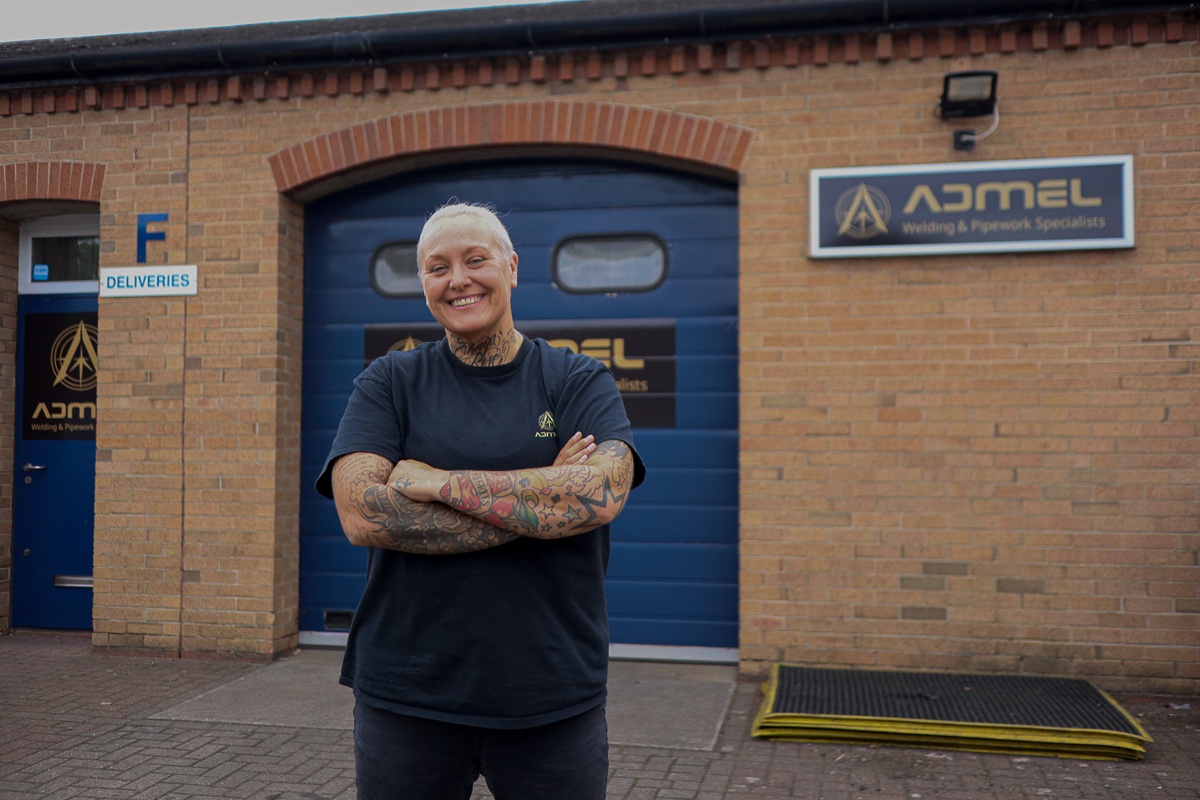
A FEMALE welder – who lost a lucrative job because there wasn’t a female toilet – fears the sector still has a “boy’s club” mentality.
For over three decades, Mel Stewart has battled adversity and proven doubters wrong after becoming one of the North East’s first female welders.
Now 50, Mel has faced bullying, sexism and rejection – but has risen to the top, rubbing shoulders with royalty on the route to launching a successful business with her best friend.
Via that company, AdMel, she’s often headhunted for work across the world – helping to construct data centres and travelling as far as China.
Now she’s also fighting so more females can weld – and so the barriers she faced for over 30 years eventually vanish.
“I went through the mill to get into welding, even changing my name on job applications just to get through the front door,” said the Ashington-born welder.
“I had to change my name and fight to get through the door, to prove myself. But once I was in there, they realised I was as good as any man.”
Yet the sector is still heavily male-dominated.
Industry data shows as few as three per cent of all UK welders are female.
For Mel, “old school” attitudes have been a major stumbling block historically to bridging that gap.
“When I started as an apprentice, there were no lasses on the shop floor,” said Mel, who now lives in Bedlington.
“I faced a ton of animosity from old-school men from the pits, who didn’t take well to a female on the shop floor.
“I was told that I should be a hairdresser, not a welder.”
After moving to Australia for work, she returned and applied for dozens of jobs – without even a rejection letter.
Then an agency in Aberdeen called.
“When they heard my voice, the first thing they asked was to speak to my husband – I had to point out I was Mel,” she recalled.
When she was eventually considered for the role, she was crushed to be told she couldn’t have the job – as the site didn’t have facilities for women.
“I offered to pee in a bucket or share a toilet,” she laughed.
“But there was no way they could get you in. They told me it was health and safety.
“The job and money were fantastic – and I lost that opportunity just because they didn’t have a toilet.”
And while sexism in the industry has become less openly aggressive over the years, decades later, Mel feels the underlying attitude hasn’t disappeared.
“In one job, a male worker was discussing a young female apprentice welder. He said she was find at the job, but there wasn’t any point having her on the shop floor because of the distraction she’d cause to the men,” she added.
“I suggested the fix would be the element of self-control.
“That mindset is still there. A lot of men think we still don’t belong or have the right to weld.
“And that’s what I’m fighting against – changing the thought process so people realise women deserve to be in this job as much as anyone else.”
And the reality is the sector needs as many new faces as possible.
Currently, Britain needs around 1,000 new welders each year, yet in 2024, just 231 welding apprenticeships commenced.
The sector is aging, with a shrinking talent pool left to train the next generation.
At AdMel, Mel and co-founder Adam Maughan are doing just that – with the fast-growing firm working with their apprentices to pass on years of experience.
And the company is flourishing; Contracts have included NHS projects, while they areas often sought out for consultancy work.
Additionally, a self-proclaimed “tinker” at school, Mel’s also worked on schemes to help troubled youngsters avoid a future in crime.
Having struggled to get her foot in the door for years, as Director at AdMel she hopes her story can influence more women to try welding – especially since Government data shows just one in 10 engineering and manufacturing apprentices are female.
“I had to get my own business to become the person I want to be, because I’ve had so many businesses where I could have been a director but I was never given the opportunity,” she said.
“I just want to have the chance to make sure others get the opportunity they deserve.”
Share this post
- Copy to clipboard
-

-

-
